
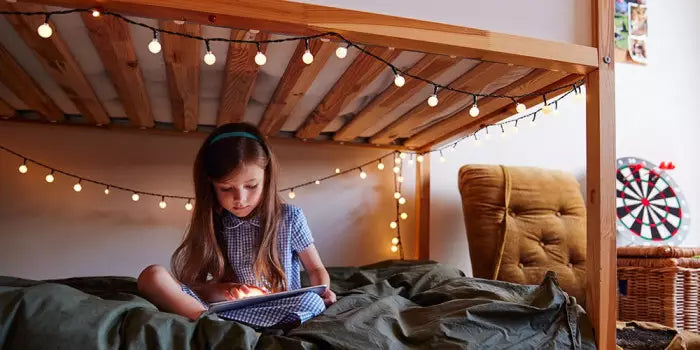
Lighting engineering is a discipline that has been developing in recent years, so much so that more and more experts are trying their hand at this field. Those who study lighting engineering will be able to help you, not only in choosing the lights that will enhance your home, but above all they will guide you in identifying the best arrangement in the internal and external environments of the house, with the aim of making the environment harmonious and balanced.
Does the arrangement of the lights really change the atmosphere of the house? Absolutely yes. The reason why this discipline is evolving only in recent years is very simple: when you renovate your home or buy a new one, you tend to give little importance to where the lights will be positioned when in fact they cover a fundamental aspect. More and more architects are realizing how much correct lighting can enhance the spaces of a home, which is why many of them try their hand at lighting engineering, trying to understand the behavior of lights at a building level.
Lighting is part of the initial project
Lighting technology teaches us that it is not enough to understand whether a room prefers warm or cold light or a large or small lamp. It will be necessary to carry out a lighting study for each room of the house, taking into account the atmosphere you want to express through the lights and the furnishings chosen for the house. In this way it will be possible to design a personalized and perfect lighting system for your home.
Once you have designed the layout, intensity and colors of the lights, you can choose the chandeliers and lamps that you like best and that best match the color of the walls and the rest of the surrounding furniture.
Why turn to an expert
The architect specialized in lighting engineering takes the more specific name of lighting designer and his main objective is to find the perfect balance between the best lighting strategy lighting and the maximum plausible energy savings. The ideal would be to support the team of interior designers with an architect specialized in lighting engineering already in the first phase of the renovation or construction project of the property, in this way the lighting designer will have the possibility of inserting the lighting immediately, limiting the costs that would be necessary for post-renovation changes, aimed exclusively at organizing the lights.
However, even if you decide to intervene in the phase following the renovation, as far as the lights are concerned, the advice is to adopt tailor-made solutions in order to create the right atmosphere for your home.
Some tips for DIY
Although the professionalism of a lighting expert is essential to obtain a satisfactory result, we want to give you some general guidelines that will help you make the right choice at the time of purchase:
Choose at least three light points per room: this will help you create the right contrasts, also based on the colors already present in the room. The goal is to create an effect similar to natural light.
Select lights of various intensities: paradoxically, it will help you make the general lighting more realistic and homogeneous. Furthermore, in this way you will also be able to work on the backlighting, which is essential for creating shadow in the right places.
Choose points to integrate accent lighting: these are the parts of the house that you care about most and that you think deserve particular attention in terms of lighting.
Choosing the right “temperature” of light: thanks to LED bulbs you will be able to choose the temperature and intensity of the light based on the type of atmosphere you want to reproduce. For example, in an environment such as the kitchen, where you need maximum light, a cold white shade is preferable, on the contrary, in the living room a warmer and softer light is preferable.


